The rules I refuse: how I lead
Ten marketing rules I have quietly refused for years, and what I do instead.
There is a version of marketing that runs entirely on obedience. Follow the trend, shorten the copy, copy the template, react every week, perform your pain, pressure the buyer, explain the algorithm for free, borrow someone else's credibility, compare your journey to every bigger account, and never question the platform that sets the rules.
I have spent more than a decade inside global marketing teams, and I have refused most of that. Not out of stubbornness, but because every one of those rules asks you to trade long-term trust for short-term visibility. On social I share these as ten slides. Here they get the room they deserve, with the reasoning underneath.
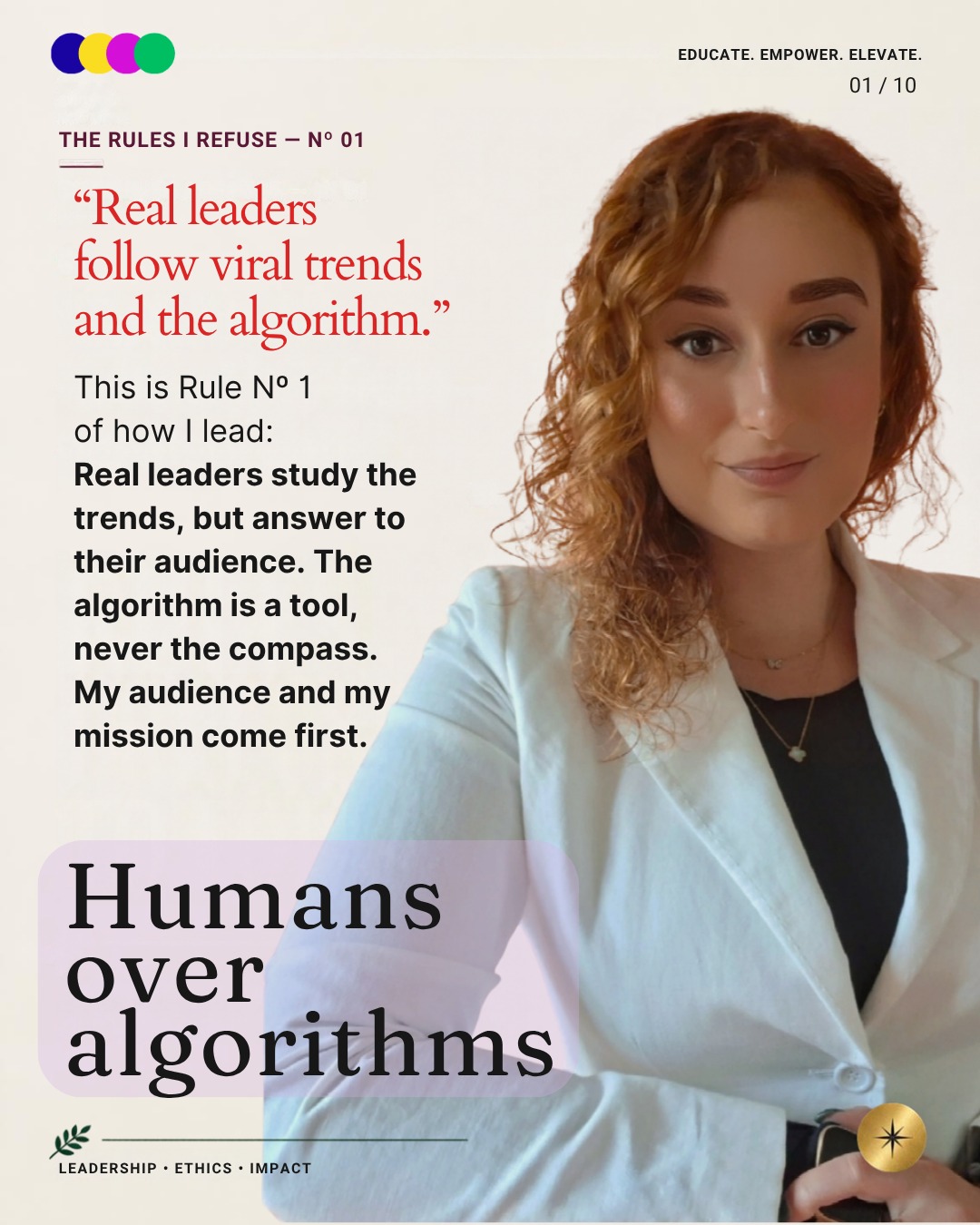
“Real leaders follow viral trends and the algorithm.”
Nº 1 — Humans over algorithms
Real leaders study the trends, but they answer to their audience. The algorithm is a tool, never the compass.
I read platform changes the way a sailor reads weather: useful information, not a destination. The destination is set by the people I am trying to reach and the mission I am trying to serve. When those two disagree with the feed, the feed loses.
My audience and my mission come first.
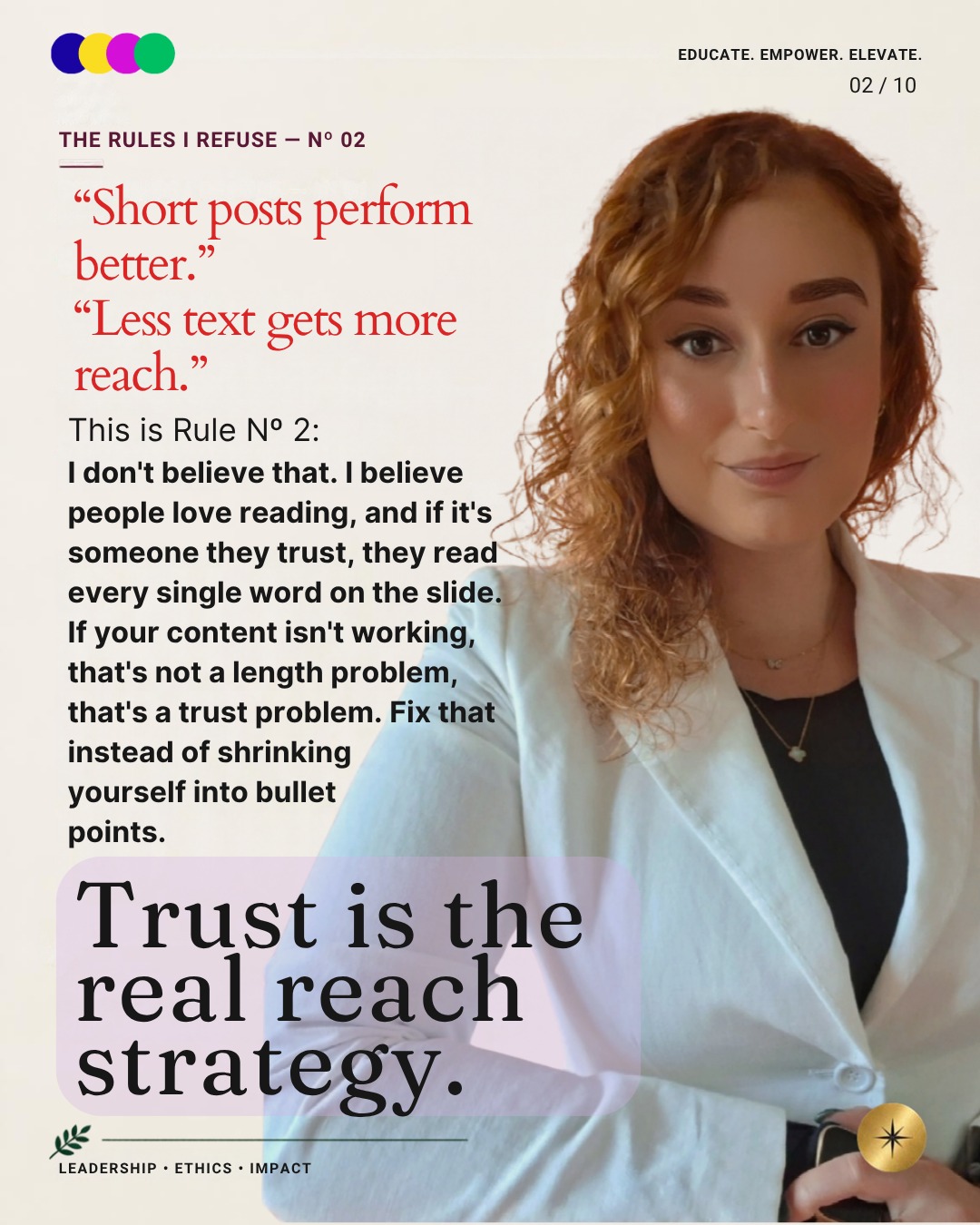
“Short posts perform better. Less text gets more reach.”
Nº 2 — Trust is the real reach strategy
I do not believe that. People love reading. When it is someone they trust, they read every single word on the slide.
If your content is not working, that is rarely a length problem. It is a trust problem. Fix the trust and length stops mattering. Shrinking yourself into bullet points only makes you easier to scroll past.
Fix the trust instead of shrinking yourself into bullet points.
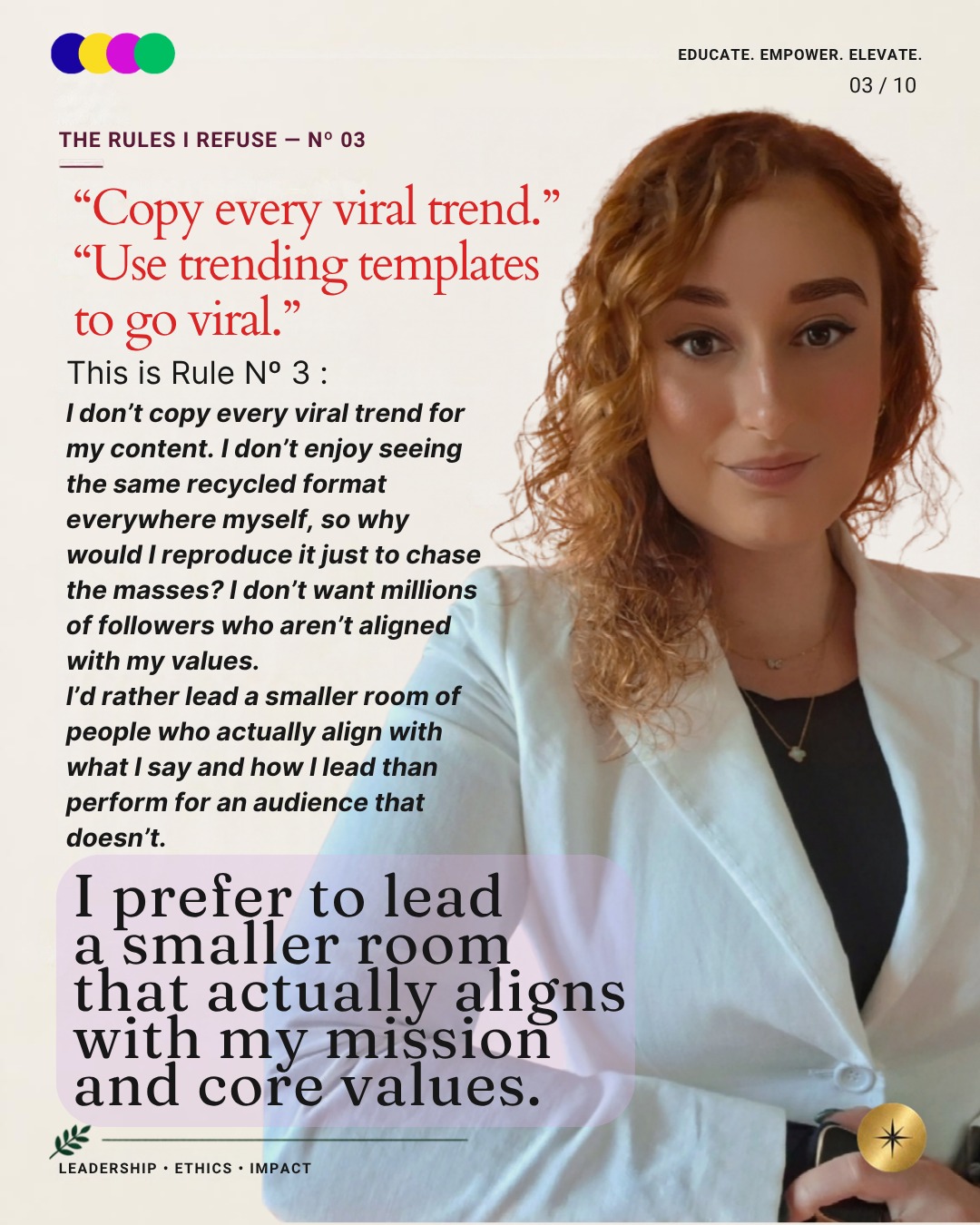
“Copy every viral trend. Use trending templates to go viral.”
Nº 3 — A smaller, aligned room
I do not copy every viral trend for my content. I do not enjoy seeing the same recycled format everywhere myself, so why would I reproduce it just to chase the masses?
I do not want millions of followers who are not aligned with my values. I would rather lead a smaller room of people who actually align with what I say and how I lead, than perform for an audience that does not.
I prefer to lead a smaller room that actually aligns with my mission and core values.
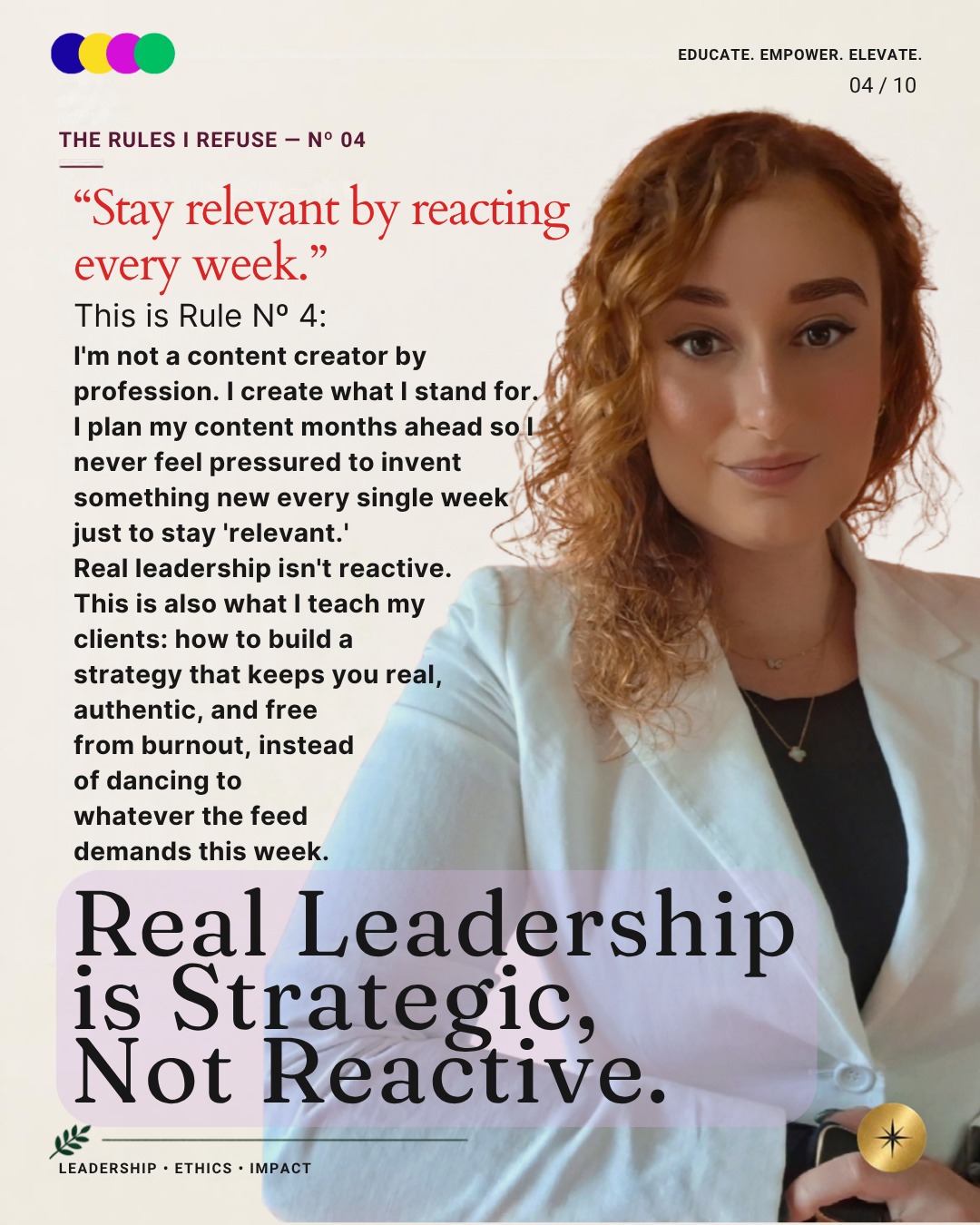
“Stay relevant by reacting every week.”
Nº 4 — Real leadership is strategic, not reactive
I am not a content creator by profession. I create what I stand for. I plan my content months ahead so I never feel pressured to invent something new every single week just to stay relevant.
This is also what I teach my clients: how to build a strategy that keeps you real, authentic and free from burnout, instead of dancing to whatever the feed demands this week.
Real leadership is strategic, not reactive.
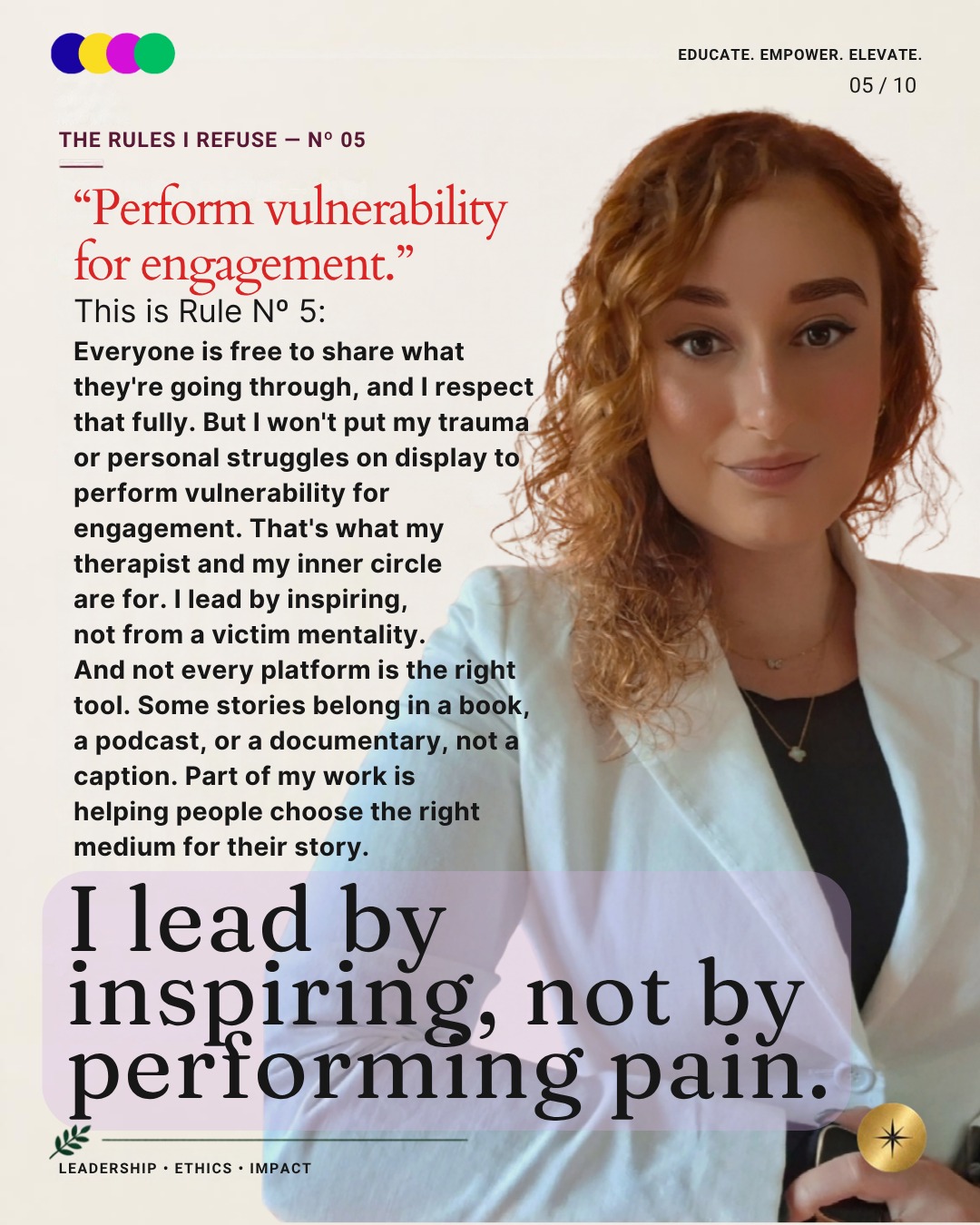
“Perform vulnerability for engagement.”
Nº 5 — I lead by inspiring, not by performing pain
Everyone is free to share what they are going through, and I respect that fully. But I will not put my trauma or personal struggles on display to perform vulnerability for engagement. That is what my therapist and my inner circle are for.
And not every platform is the right tool. Some stories belong in a book, a podcast or a documentary, not a caption. Part of my work is helping people choose the right medium for their story.
I lead by inspiring, not from a victim mentality.
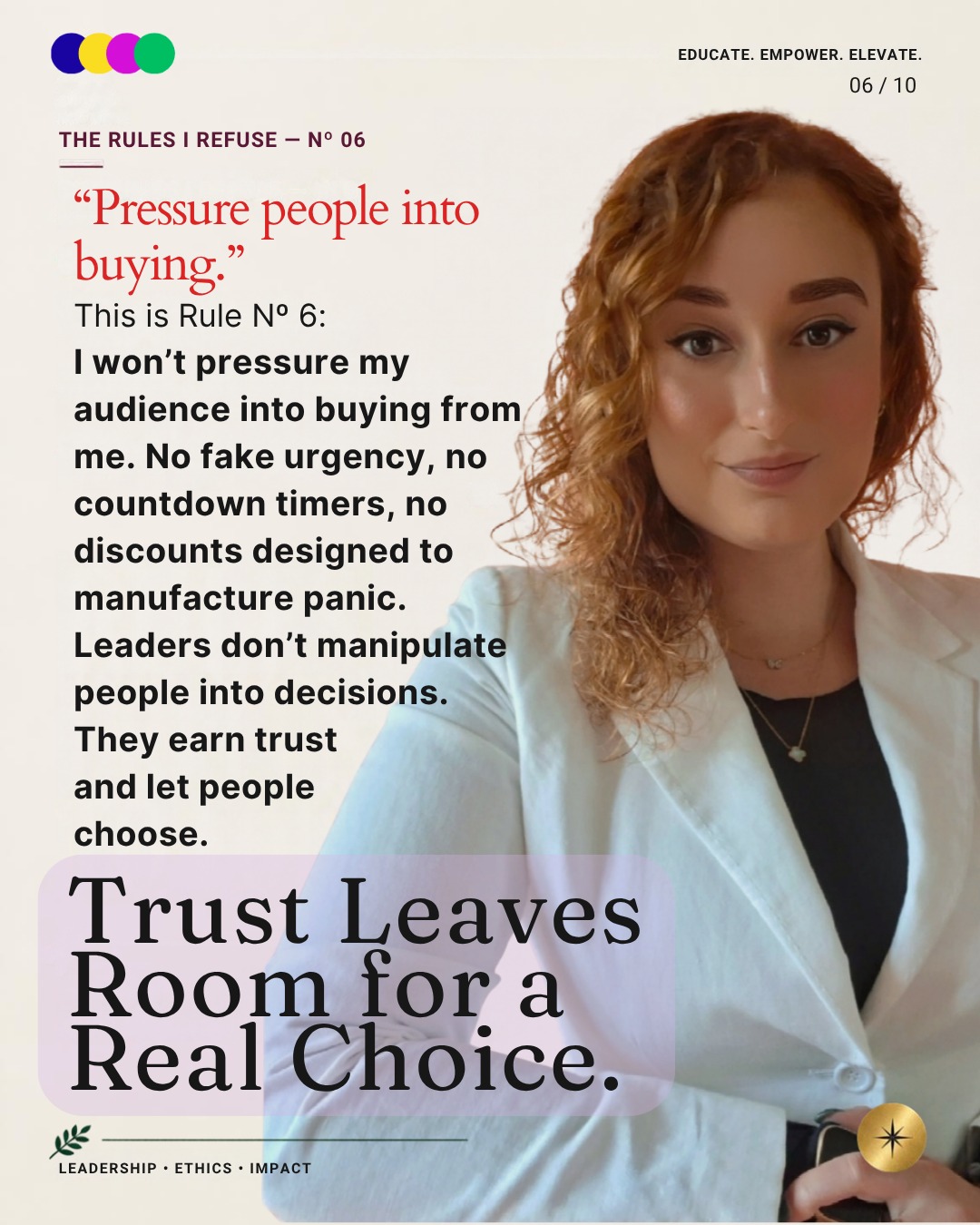
“Pressure people into buying.”
Nº 6 — Trust leaves room for a real choice
I will not pressure my audience into buying from me. No fake urgency, no countdown timers, no discounts designed to manufacture panic.
Leaders do not manipulate people into decisions. They earn trust and let people choose. A decision made under pressure is a client relationship that starts with resentment.
Trust leaves room for a real choice.
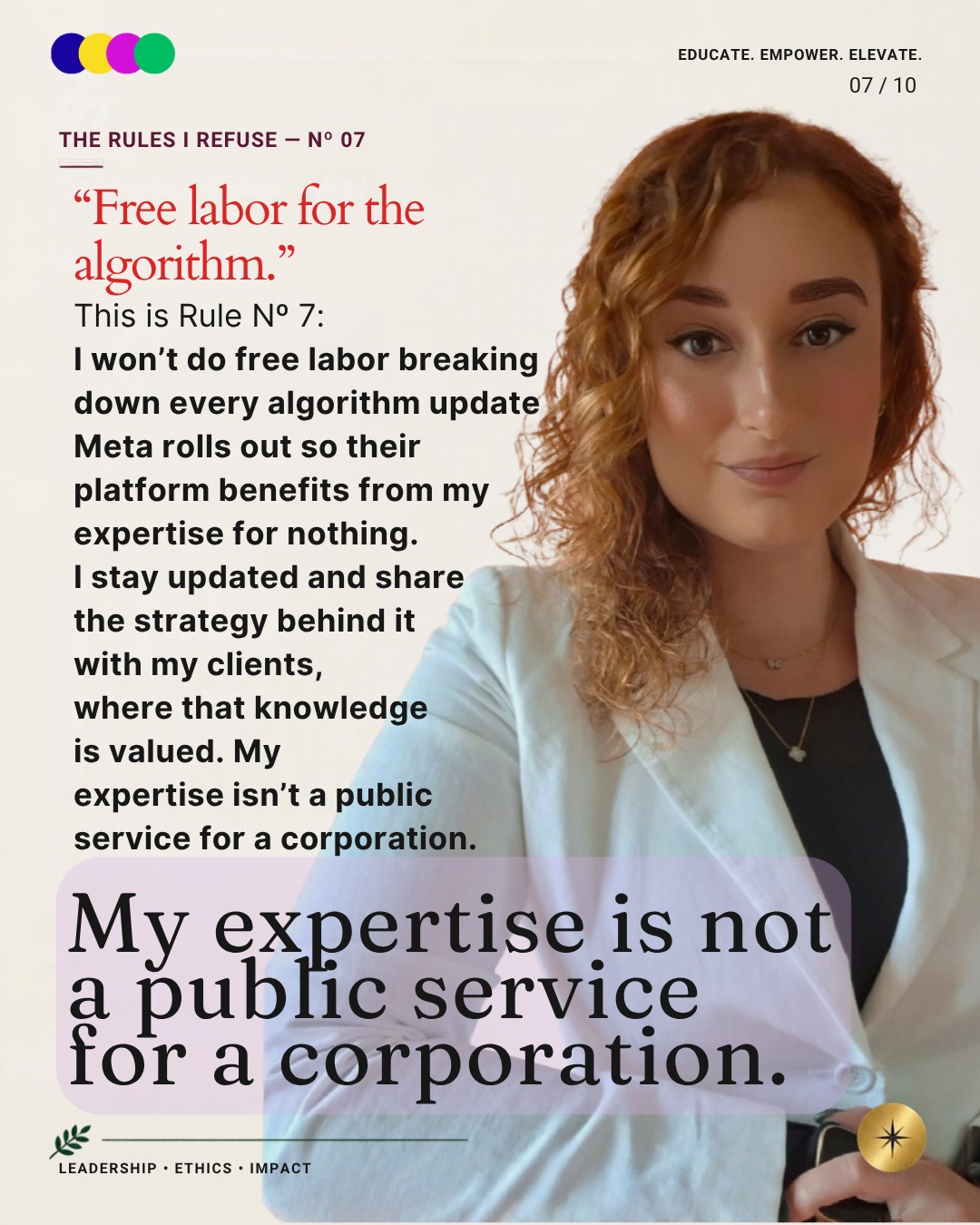
“Free labour for the algorithm.”
Nº 7 — My expertise is not a public service for a corporation
I will not do free labour breaking down every algorithm update a platform rolls out so that the platform benefits from my expertise for nothing.
I stay updated, and I share the strategy behind it with my clients, where that knowledge is valued.
My expertise is not a public service for a corporation.
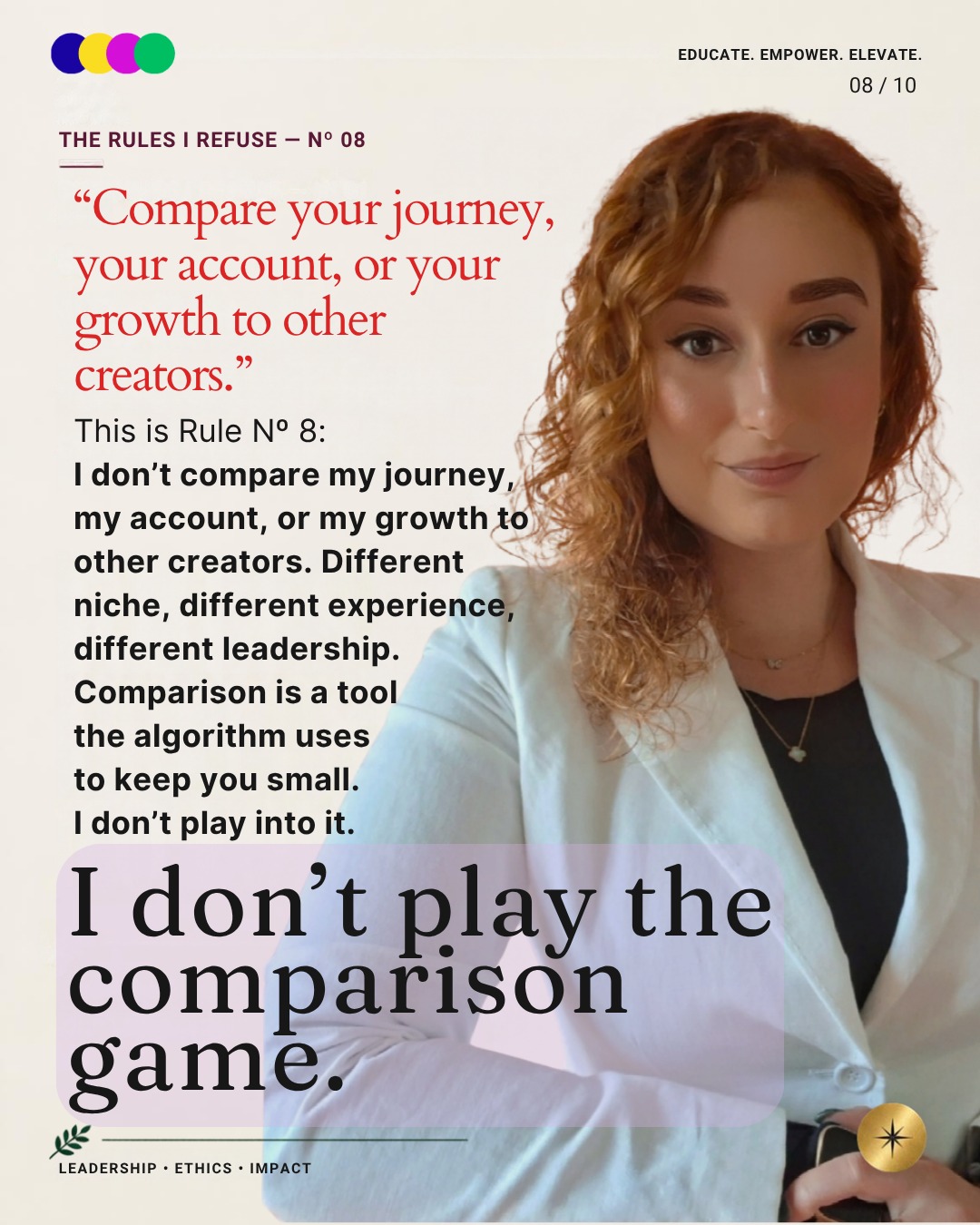
“Compare your journey, your account, or your growth to other creators.”
Nº 8 — I don't play the comparison game
Different niche, different experience, different leadership. Comparison is a tool the algorithm uses to keep you small, and I do not play into it.
I measure my progress against my own values and the change I am trying to create, not against someone else's highlight reel. The only account worth comparing yourself to is your own from a year ago.
I measure my progress against my own values, not someone else's highlight reel.
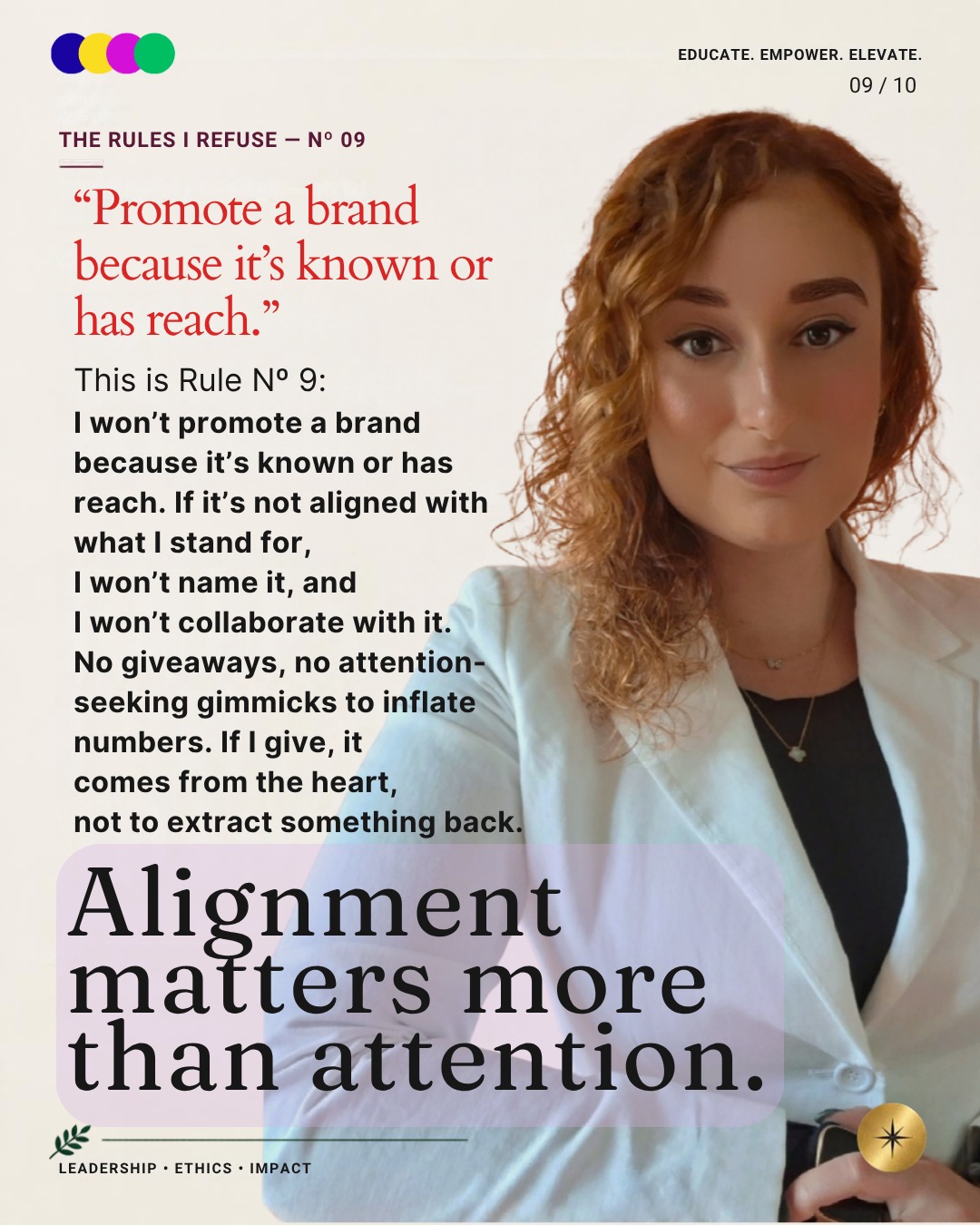
“Promote a brand because it is known or has reach.”
Nº 9 — Alignment matters more than attention
I will not promote a brand because it is known or has reach. If it is not aligned with what I stand for, I will not name it and I will not collaborate with it.
No giveaways, no attention-seeking gimmicks to inflate numbers. If I give, it comes from the heart, not to extract something back.
Alignment matters more than attention.
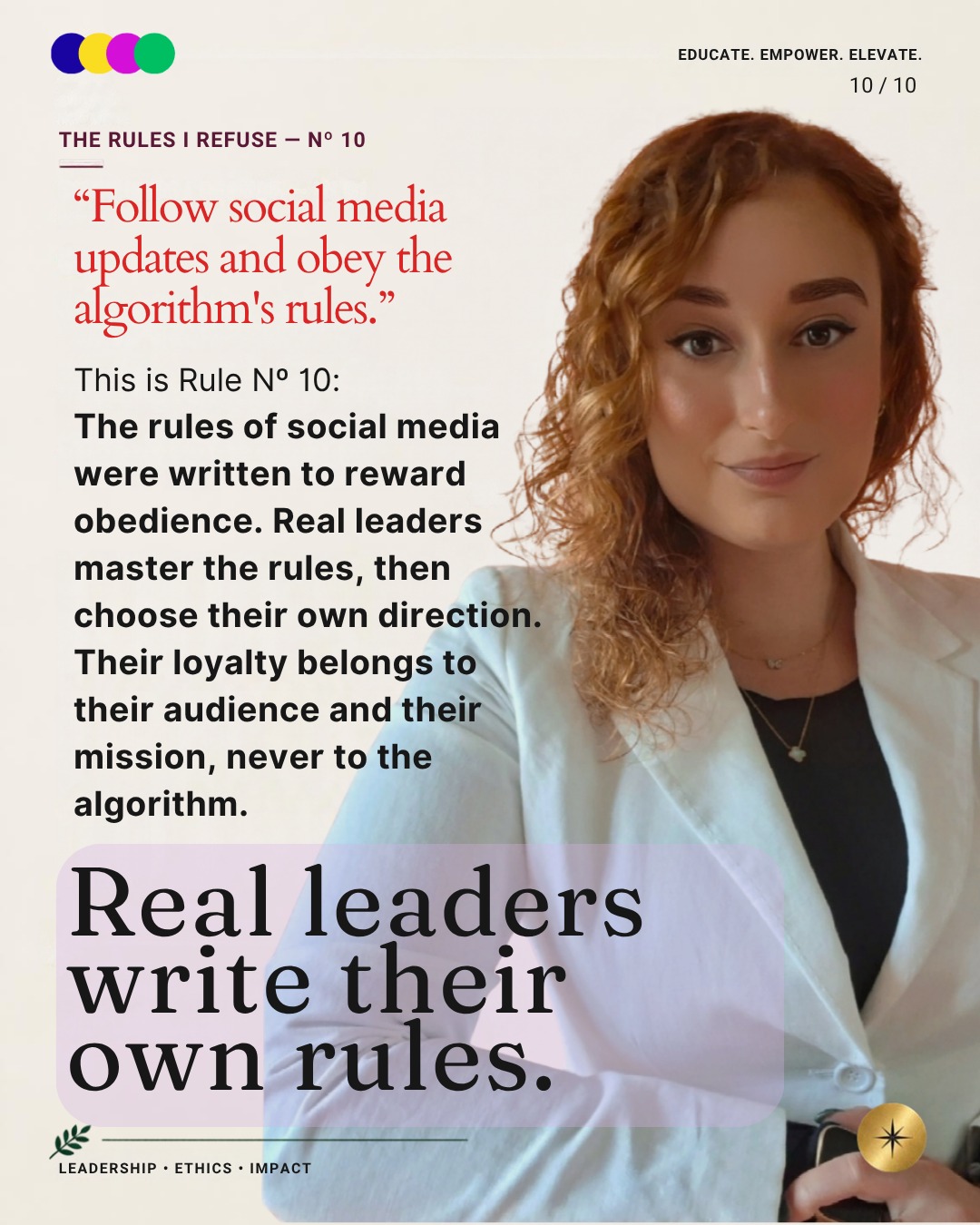
“Follow social media updates and obey the algorithm's rules.”
Nº 10 — Real leaders write their own rules
The rules of social media were written to reward obedience. Real leaders master the rules, then choose their own direction.
Their loyalty belongs to their audience and their mission, never to the algorithm.
Real leaders write their own rules.
None of this is anti-marketing. It is marketing that can still look you in the eye in five years. Every refusal above buys the same thing: a relationship with the people you serve that does not depend on a platform's mood.
If you are building something purpose-driven and you are tired of tactics that ask you to shrink, perform or pressure, that is exactly the work I do with clients.
A shorter version of this also lives on LinkedIn and Instagram.
Monthly newsletter
One email a month. Only what actually matters.
New writing, current thinking and what I am working on, sent once a month. Nothing weekly, nothing automated.