Complexity does not need to be dumbed down, it needs to be made human
What a storytelling workshop for deep tech at WTC Amsterdam taught me about narrative, AI tools and making hard ideas land.
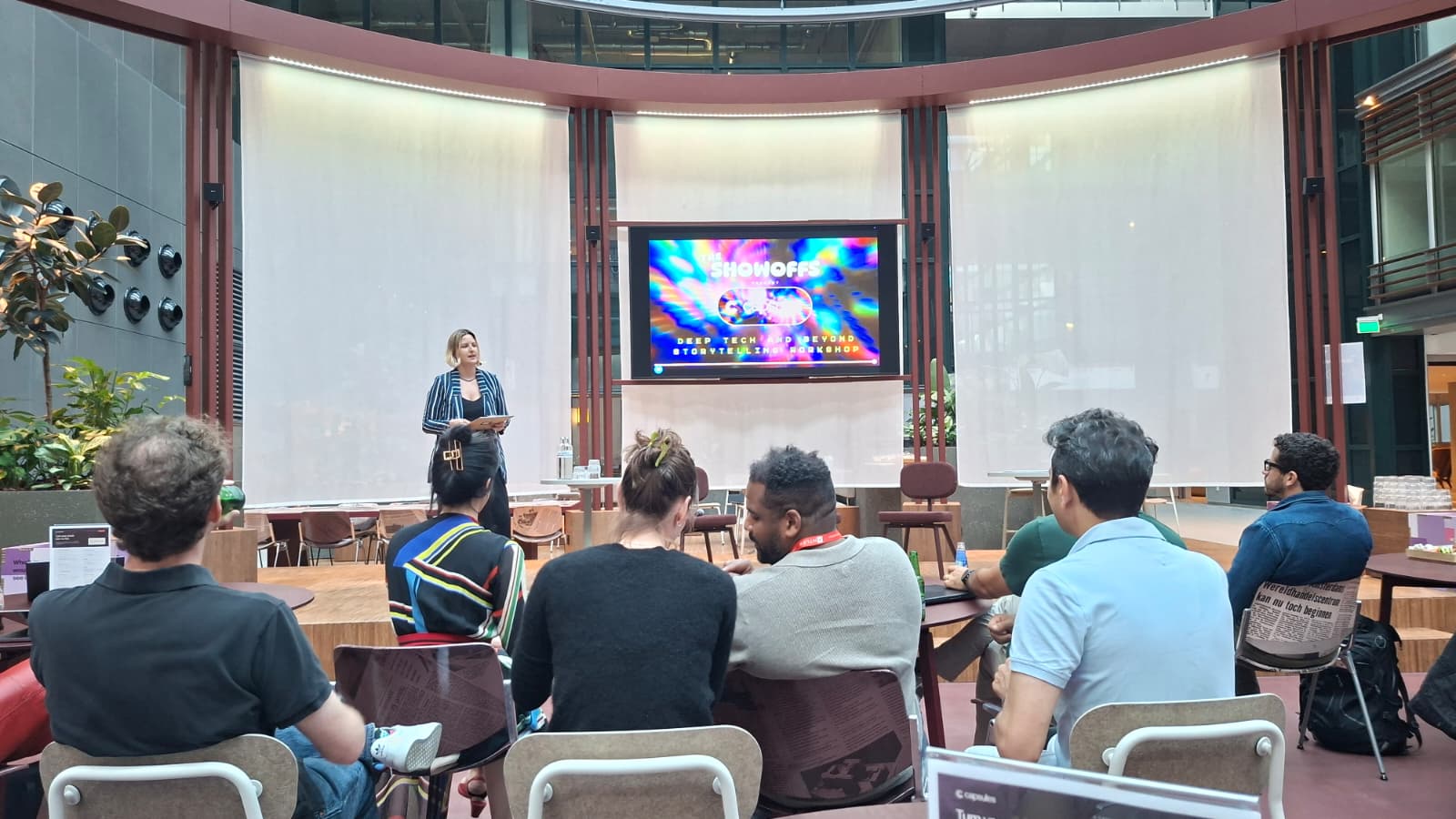
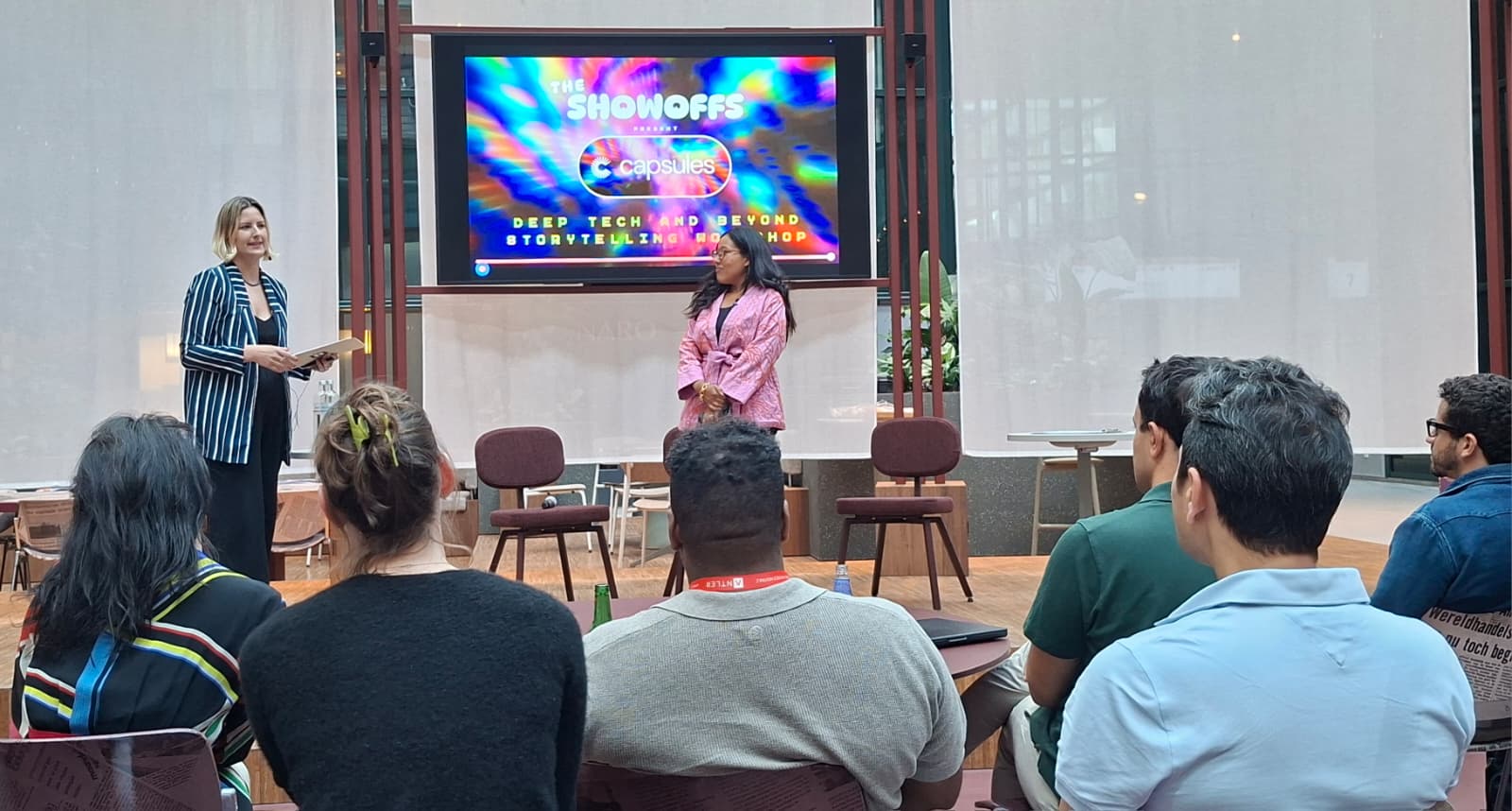
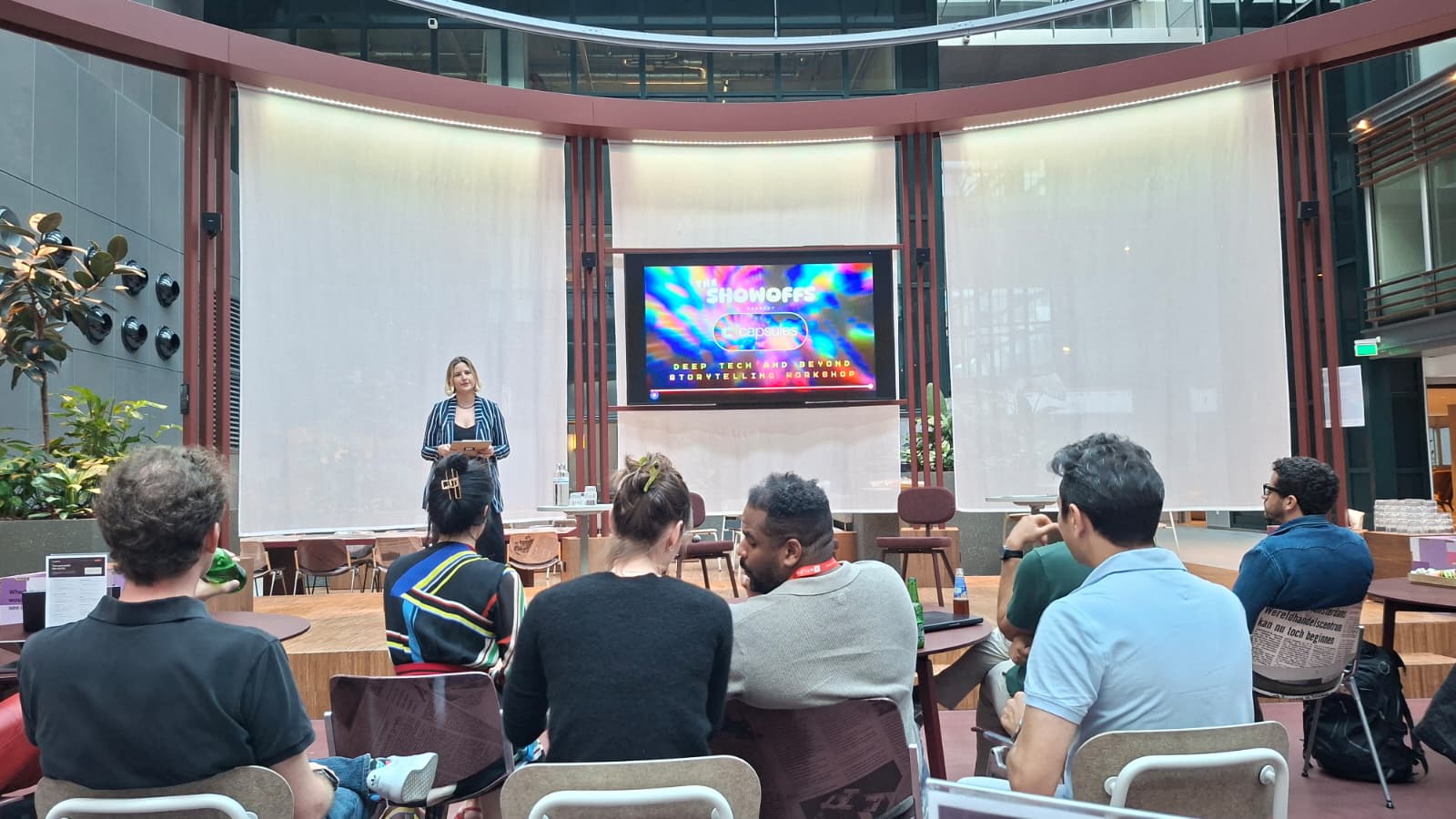
Last week I attended The Showoffs debut event at the World Trade Center in Amsterdam, a storytelling workshop for deep tech and beyond, and it reframed how I think about communicating complex ideas.
As a fractional CMO working with founders and leadership teams, I spend a lot of time on one problem: how do you make something genuinely hard to explain land with the people who need to understand it? This room was full of people working on exactly that. Here are the takeaways I am still thinking about.
“ The human still decides what the story is. The tool just helps turn words into worlds faster. ”
Human-led storytelling and AI are not in competition
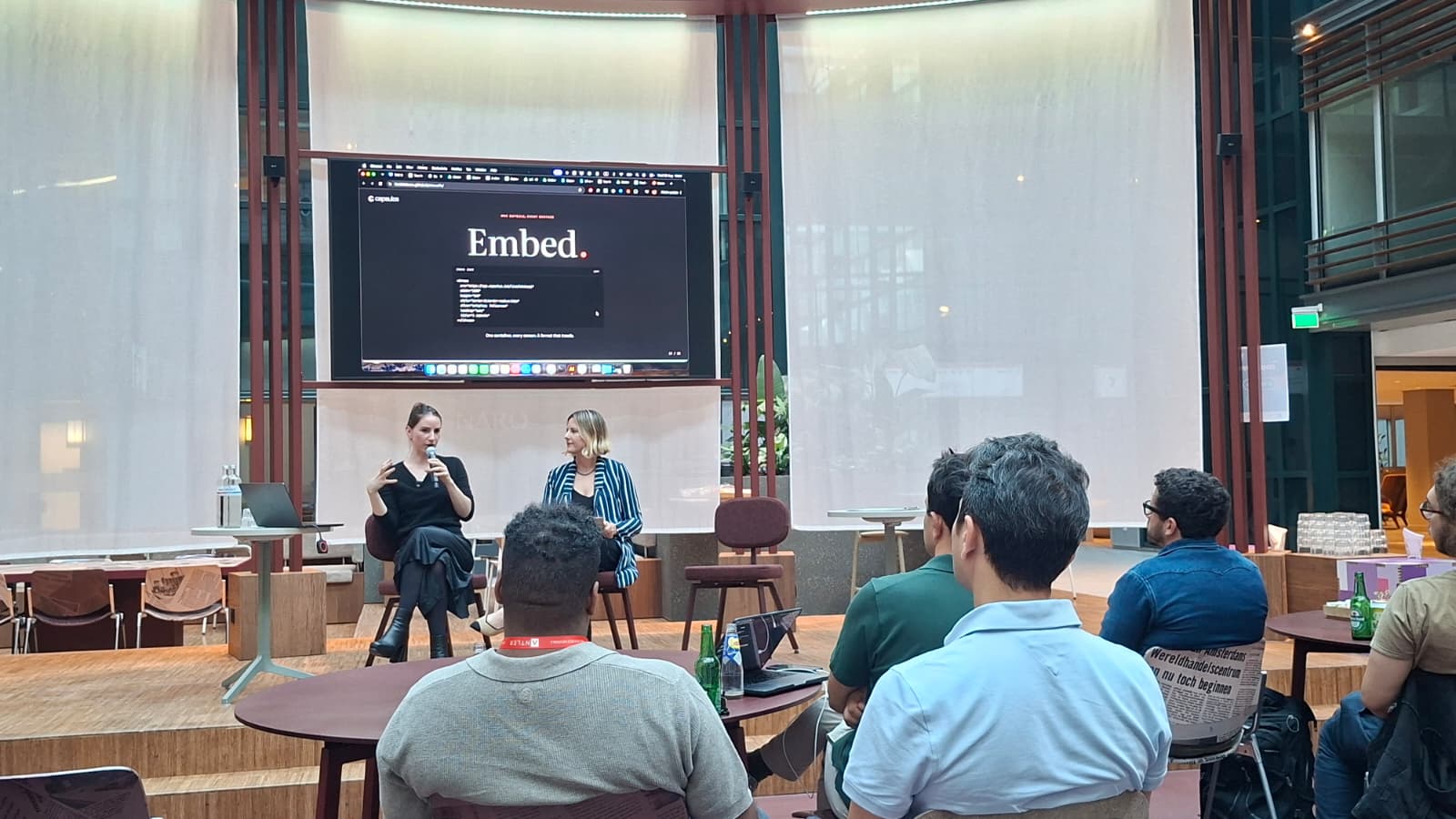
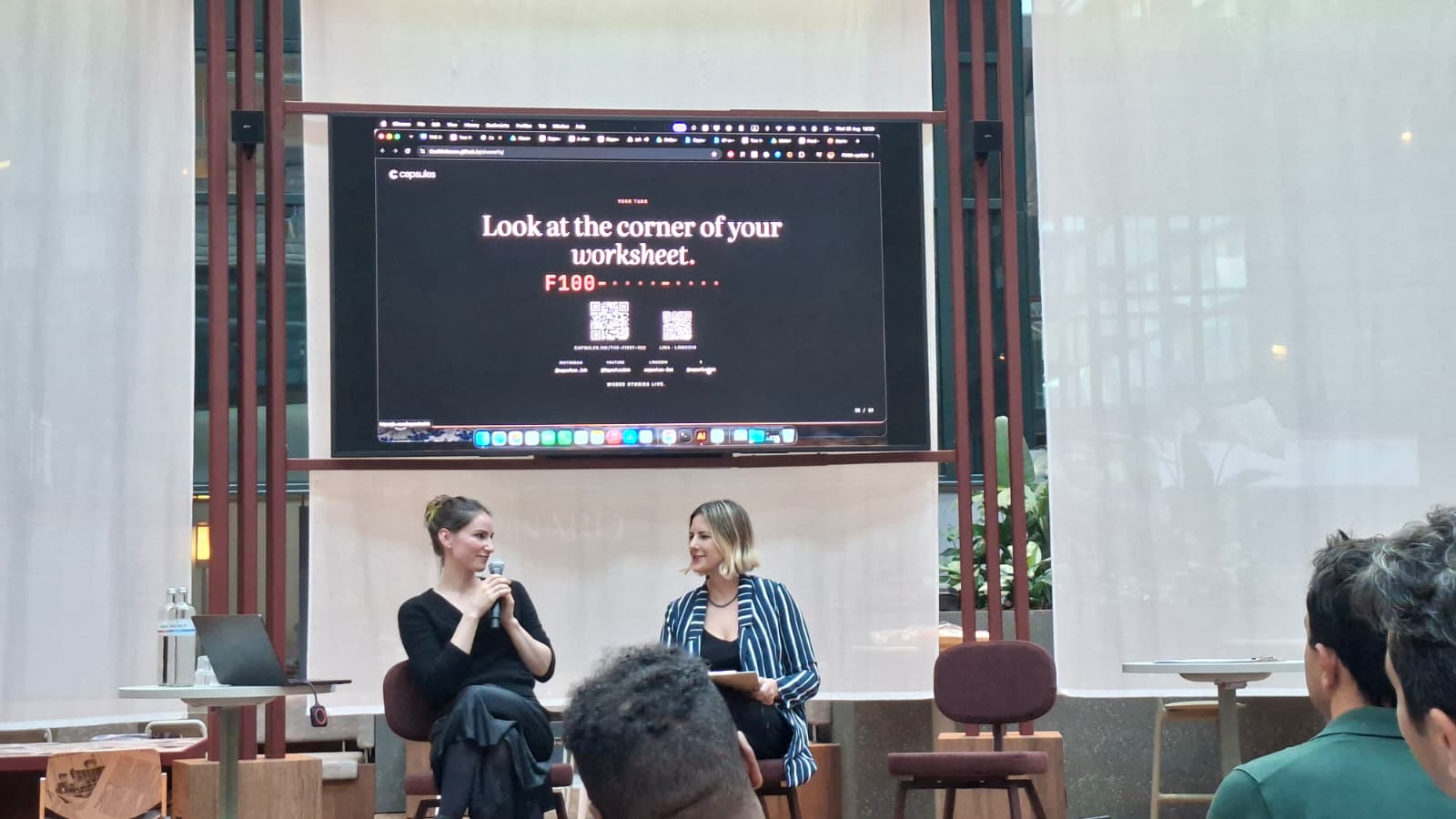
Lina Pauline, co-founder of Capsules Ink, demoed her new storytelling tool live on stage. Her core point stuck with me: human-led storytelling and AI image generation are not in competition. The human still decides what the story is. The tool just helps turn words into worlds faster.
If you are a founder building in deep tech, that is the model: lead with narrative, let the tool support it, not replace it. The moment the tool starts deciding what your story is, you have lost the only thing that makes it yours.
Lead with narrative. Let the tool support it, never replace it.
Give people a reason to care before you explain how it works
Christina Caljé of TINTT, an angel investor, shared a live Capsule on deep tech and quantum computing. Hearing firsthand what is actually happening behind the lab doors of quantum tech was a reminder of something I see founders get wrong constantly.
The best storytelling in emerging tech is not about simplifying the science. It is about giving people a reason to care before you explain how it works. Curiosity opens the door. Explanation only works once someone is standing in the doorway.
Do not simplify the science. Earn the attention first.
“ The first sentence has to earn the next one. ”
A masterclass in what makes a story land
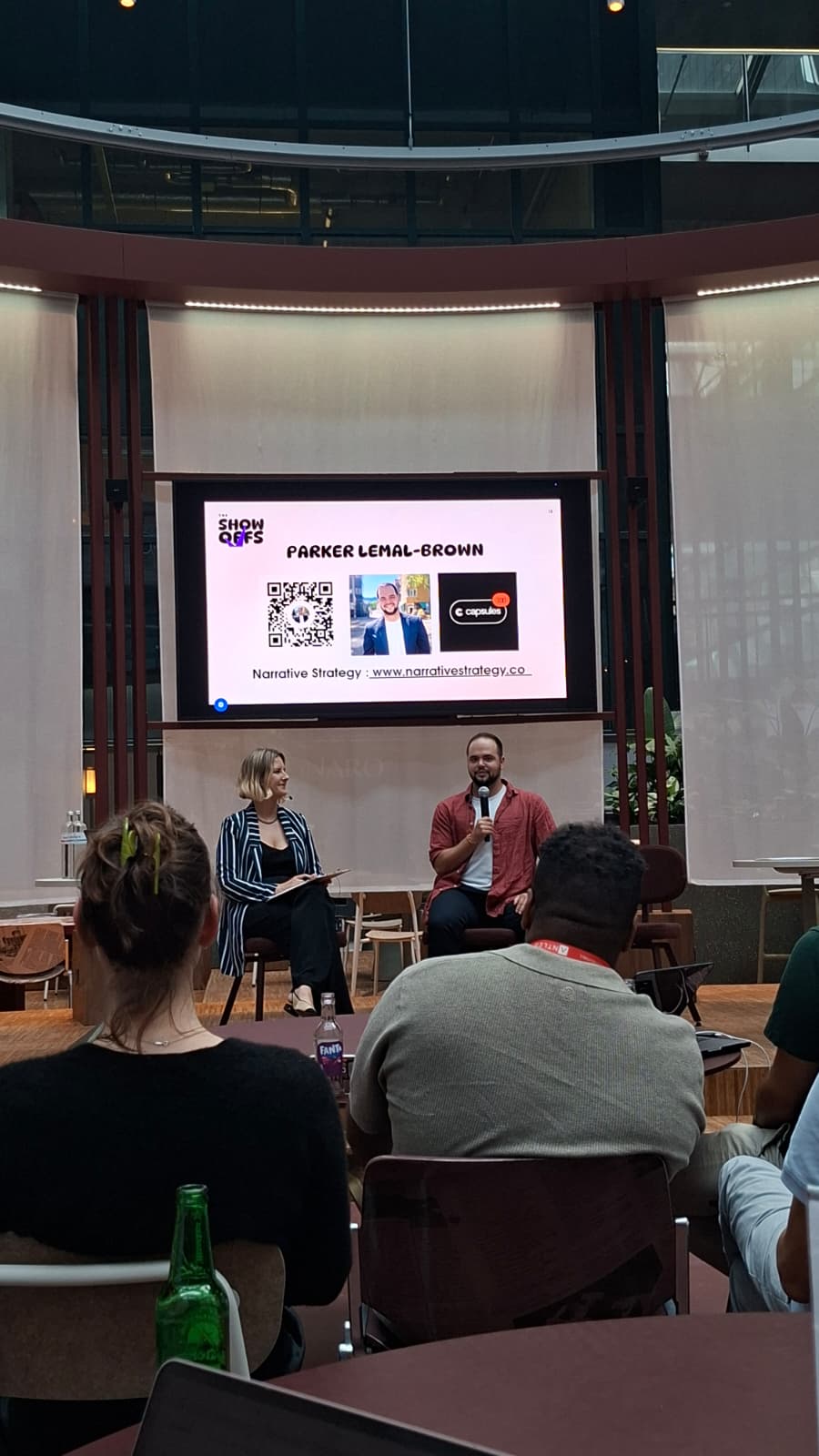
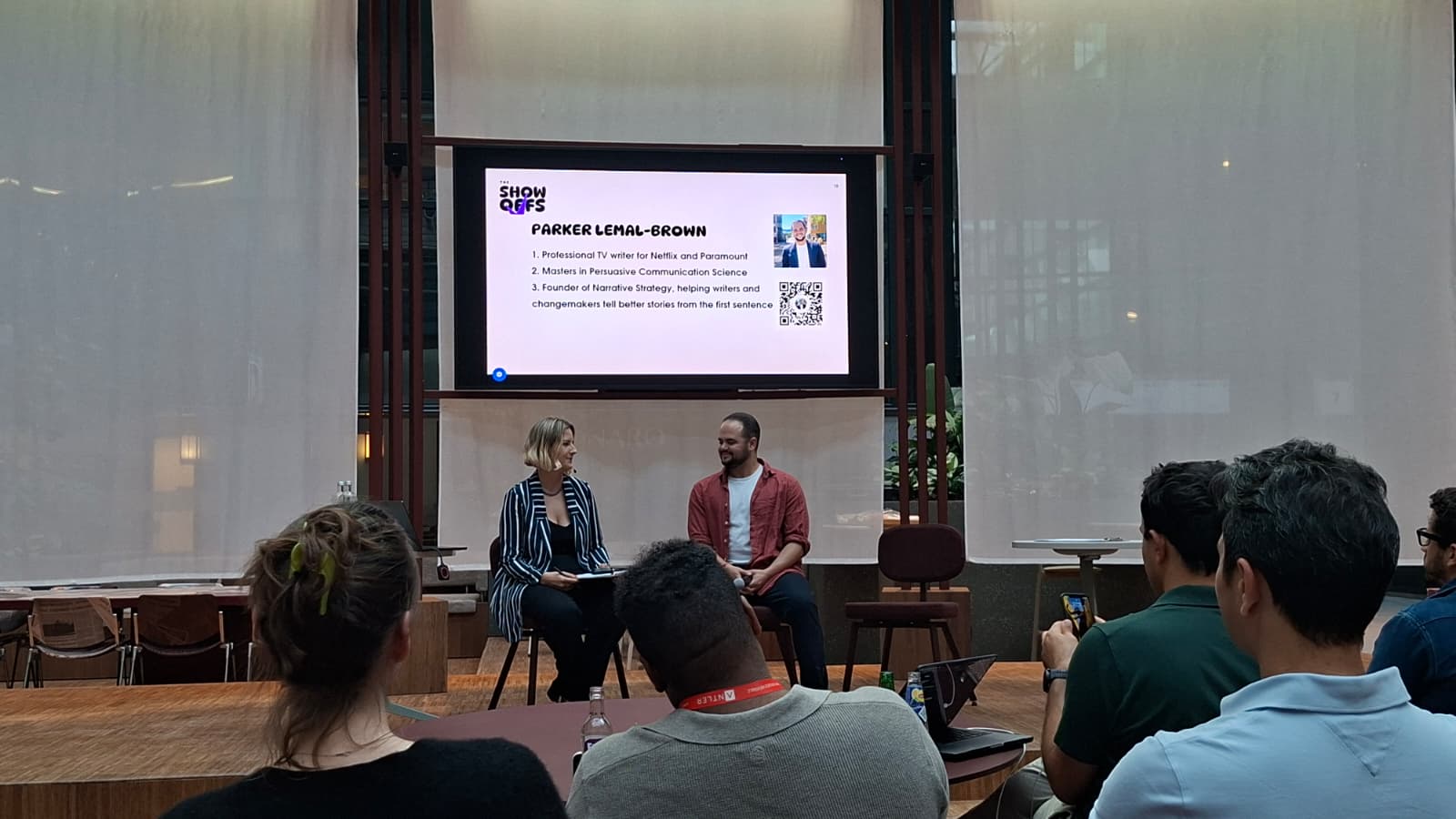
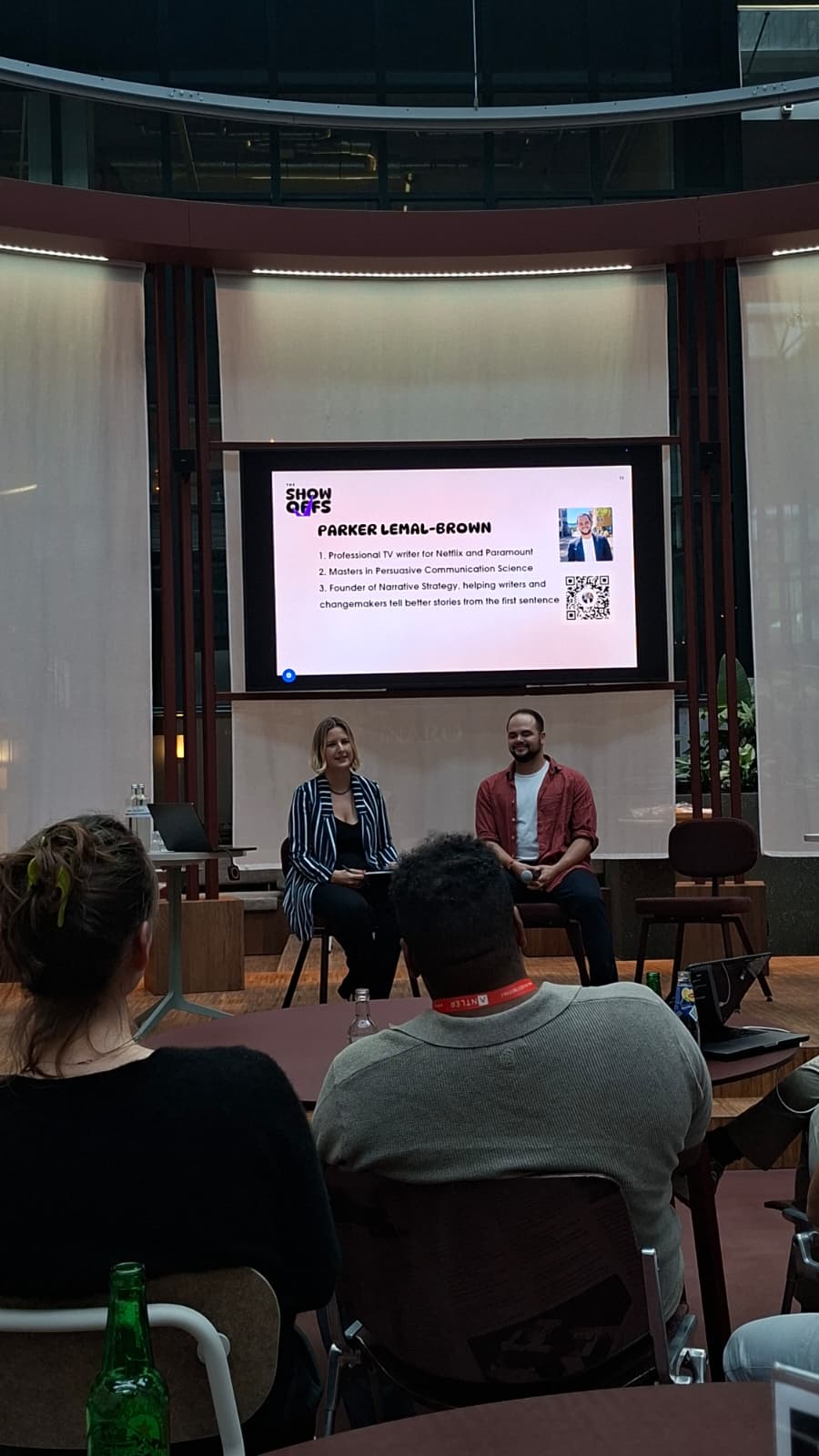
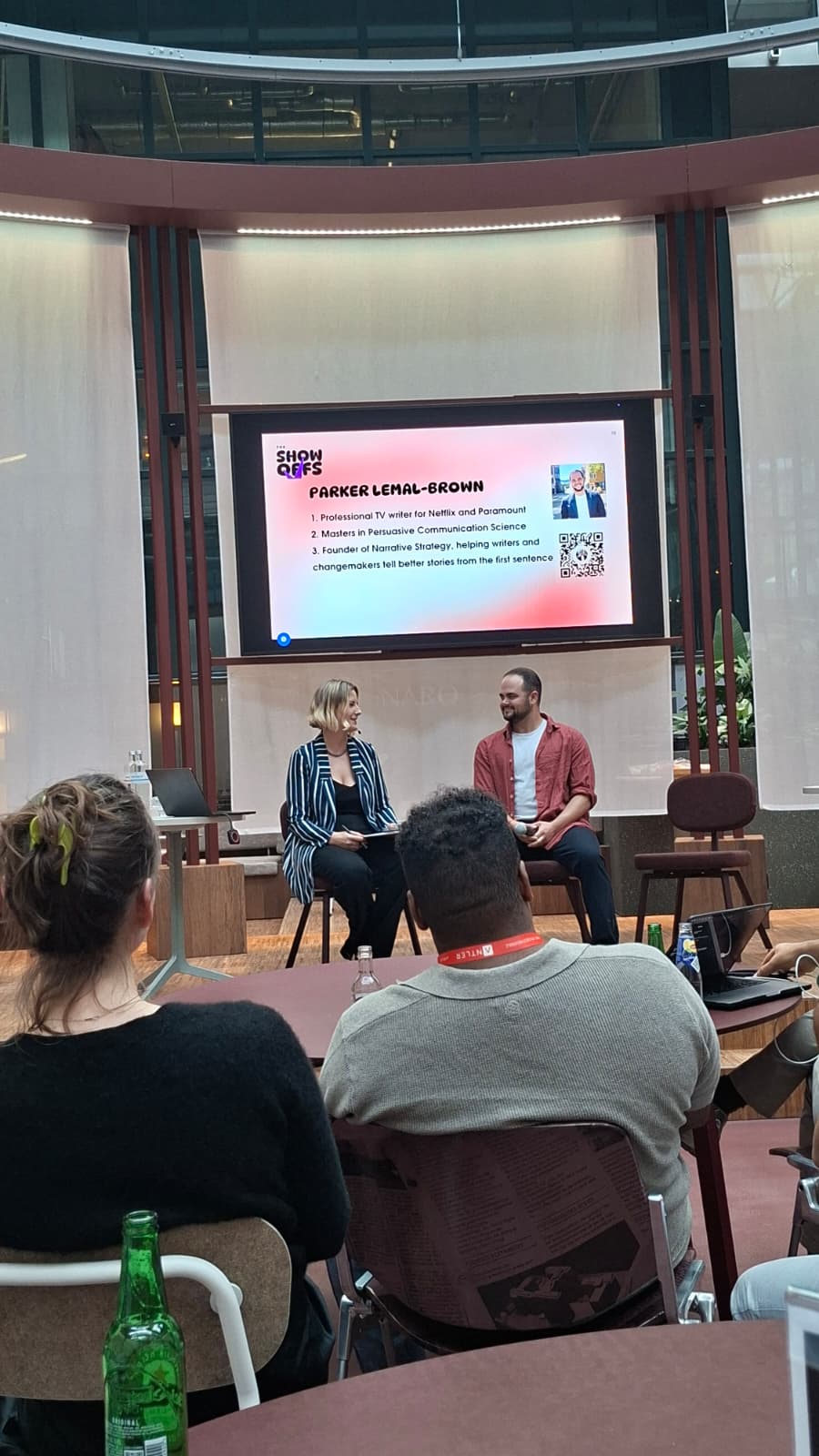
Parker Lemal-Brown, TV writer for Netflix and Paramount and founder of Narrative Strategy, gave what I can only call a masterclass in what makes a story land. His approach applies directly to pitch decks, investor updates and brand storytelling.
Most founders and marketers bury their strongest line three paragraphs in. By the time the reader reaches it, they have already left. Every sentence is a small promise that the next one is worth reading. Break that promise once and the room is gone.
The room itself was the point
It was also great to connect with Radina Galabova, founder of RAD Amsterdam and fractional Chief Creative and Brand Officer, whose work on purpose-driven brand strategy is exactly the kind of thinking this room needed.
Events like this matter because deep tech does not have a science problem, it has a translation problem. The people who can build the future and the people who can fund, regulate and adopt it rarely speak the same language. Storytelling is the bridge, and bridges get built in rooms like this one.
The bigger lesson for CMOs and communications leads
Complexity does not need to be dumbed down, it needs to be made human. That is true whether you are explaining quantum computing, a new biotech platform or a climate model.
Your audience is not too unsophisticated for your idea. Your story is not yet worthy of their attention. That is a fixable problem, and it starts with narrative, not with simpler slides.
Your audience is not too unsophisticated for your idea. Your story is not yet worthy of their attention.
I left WTC Amsterdam with a full notebook and a sharper standard for my own work: if the first sentence does not earn the next one, rewrite it. If the tool is telling the story instead of serving it, stop. And if the science is brilliant but nobody cares yet, that is not the audience failing. That is the job.
More rooms like this, please.
Moments from the evening
Sources and further reading
Monthly newsletter
One email a month. Only what actually matters.
New writing, current thinking and what I am working on, sent once a month. Nothing weekly, nothing automated.