We Drew the Line: Care as Resistance at Amsterdam's Red Line March
A first-person account by Mirela Curiman — Intersectional feminist, human rights advocate, digital marketing leader. Amsterdam, 8 November 2026.
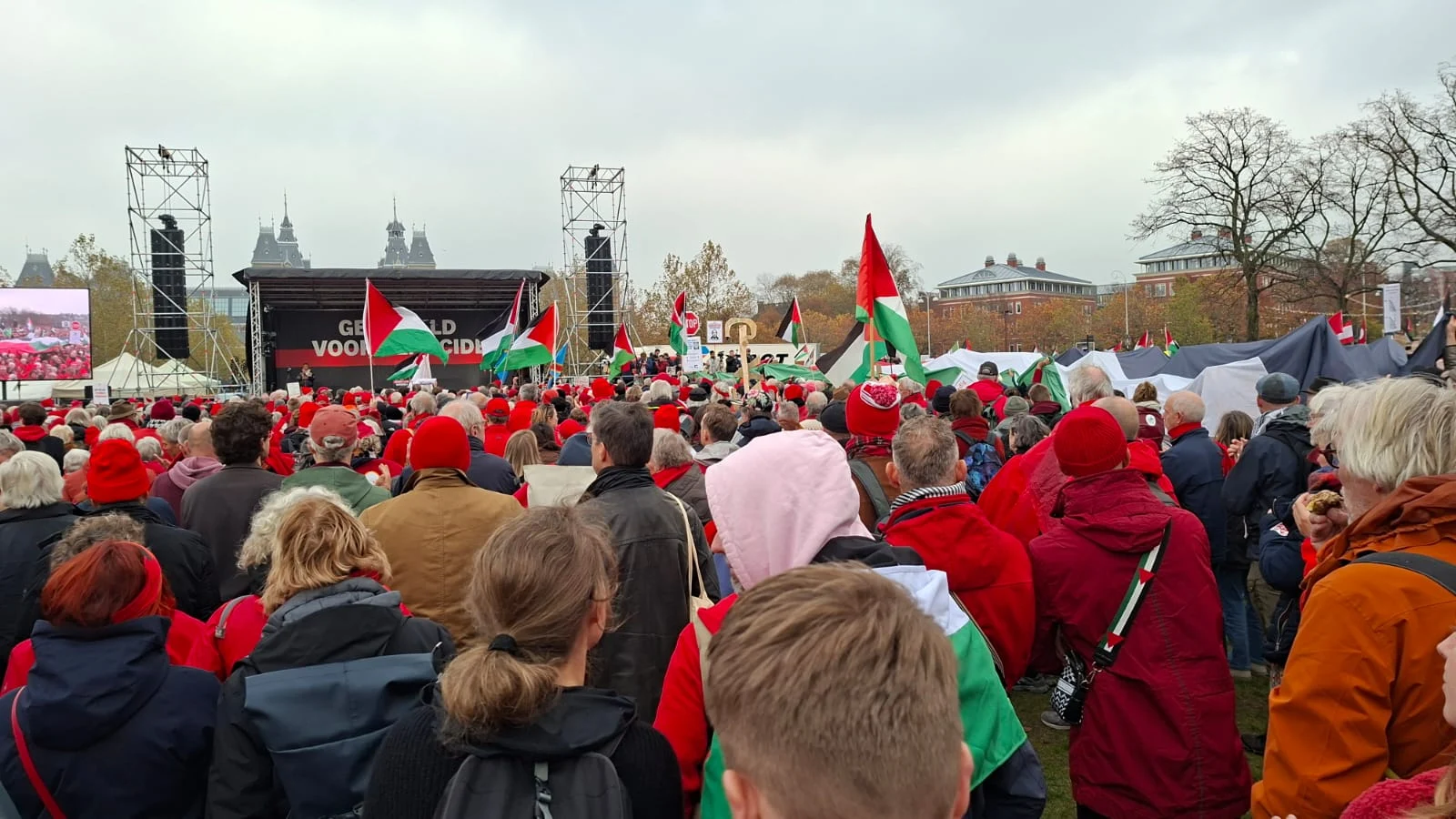
Some things are bigger than us. And some battles remind us exactly why we refuse to give up.
On Sunday, 8 November, more than 200,000 people walked the Rode Lijn Voorbij through Amsterdam. The demonstration was organised by a coalition of movements including Amnesty International and supported by 200 organisations and businesses. It was the fourth Red Line demonstration in the Netherlands, following marches in The Hague in May and June 2025 and Amsterdam in October 2025. Together, these marches have become one of the largest sustained displays of public conscience in recent Dutch history.
I was there. Not as a spectator, but as a supporter and organiser, working with Amnesty International's volunteer network in the weeks leading up to the demonstration. And I want to write about something that rarely makes the headlines: how a protest of a quarter of a million people stays peaceful, warm and safe, and why that is, above all, feminist work.
The infrastructure of care
What struck me most about this march was a concept I have never seen executed like this before, anywhere.
Long before anyone took a step, an invisible architecture of care had been built. There was an awareness team of trained volunteers whose entire purpose was to make sure everyone felt safe, seen and supported throughout the day. There were people specialised in de-escalation, positioned along the route, ready to respond calmly if tensions rose. And there were lawyers and human rights defenders wearing light blue vests, a quiet and powerful presence walking alongside the crowd. They were ready to step in front of protesters, police or any other party, so tension could be lowered before it had a chance to grow.
Think about what that design communicates: we protect our own people first. We prepare for conflict not by meeting it, but by preventing it. We build safety not through force, but through presence, training and trust.
As an intersectional feminist, I read that infrastructure as a manifesto in itself. Mainstream politics tends to reward what is loud, hard and adversarial. The labour that prevents harm, the listening, the coordination, the phone calls, the logistics, the emotional steadying of anxious strangers, is traditionally feminised work. It is undervalued, unnamed and unrecorded. And yet it was precisely this work that made the day what it was: every participant I spoke to felt safe, supported and encouraged to use their voice. Not despite the vulnerability of showing up, but because the space had been built to hold them.
The unseen labour behind the visible march
Before the march started, the crowd heard speeches that moved the city and a choir whose singing seemed to pour warmth over the whole of Amsterdam. Tourists stopped filming. Locals on balconies wept and cheered. The entire city felt united.
But behind every minute of that beauty were thousands of unpaid hours.
People made phone calls, sent messages, carried materials, coordinated logistics and mobilised communities. Entirely unpaid. Not for a salary, not for recognition, not for personal gain, but because they believe that standing up for humanity is not optional. Fifty-two weeks a year. Twelve months of commitment. Countless people giving what they have, even when they have almost nothing left to give.
Some volunteers have lost jobs for their activism. Some have lost homes. They have traded security, comfort and stability for conscience. This is the pattern feminist economists have described for decades: the work of sustaining movements, communities and care is done disproportionately by those with the least protection, and it is the last work society counts. Movements run on this labour the way cities run on the people who clean them, nurse in them and teach in them. If we forget that, we misunderstand how change actually happens.
So this is my tribute: not to the march alone, but to the care infrastructure that made a peaceful quarter-million-person march possible.
What intersectionality looked like on the street
An intersectional lens is not theory when you are standing on Dam Square. It is who you see.
It is the migrant women coordinating volunteer shifts in three languages. It is queer activists holding space and holding signs. It is disabled participants for whom the awareness team's presence was the difference between joining and staying home. It is mothers demonstrating with their children, connecting the demand for human rights with the oldest feminist truth there is: that everyone's safety is everyone's business. It is Palestinians, Jews, Muslims, Christians and atheists walking side by side.
The slogan niets over ons zonder ons, nothing about us without us, was not written on a banner that day. It was structurally embodied in how the march was organised.
What the Red Line stood for
The demands of the day were set by the organising coalition, and they matter: an end to the Dutch government's facilitation and financing of the war and occupation, an expansion of the trade ban, an end to direct and indirect arms trade and military cooperation, genuine protection for the international courts in The Hague, and recognition of the gravity of what is happening to Palestinians in Gaza. Amnesty International's director, Dagmar Oudshoorn, described the turnout as a signal the cabinet cannot ignore, with people going into the streets because they cannot stay silent.
Whatever your starting point, two facts were undeniable on that Sunday: the march was overwhelmingly peaceful, and it was extraordinary in scale and spirit.
Thank you
To every single person who showed up: thank you.
To the volunteers, organisers and activists, the awareness team, the de-escalation specialists, the legal observers in their light blue vests, the marshals, the medics, the stage builders, the sign painters, the chant starters and everyone who worked behind the scenes for weeks: thank you.
To Amnesty International and the coalition of 200 organisations standing behind this demonstration: thank you for proving that coordination at this scale, this peacefully, is possible.
To the speakers, and to the choir whose singing carried across the canals: thank you.
And to every person who refuses to look away, who turns outrage into action, who walks when it would be easier to scroll past: you are not walking alone.
You can take away our comfort. You can threaten our livelihoods. But you cannot break a movement built on conscience, humanity and love.
This was not about one person. It was, and is, about all of us.
We are more than they think. And we are growing.
Moments from the Red Line March
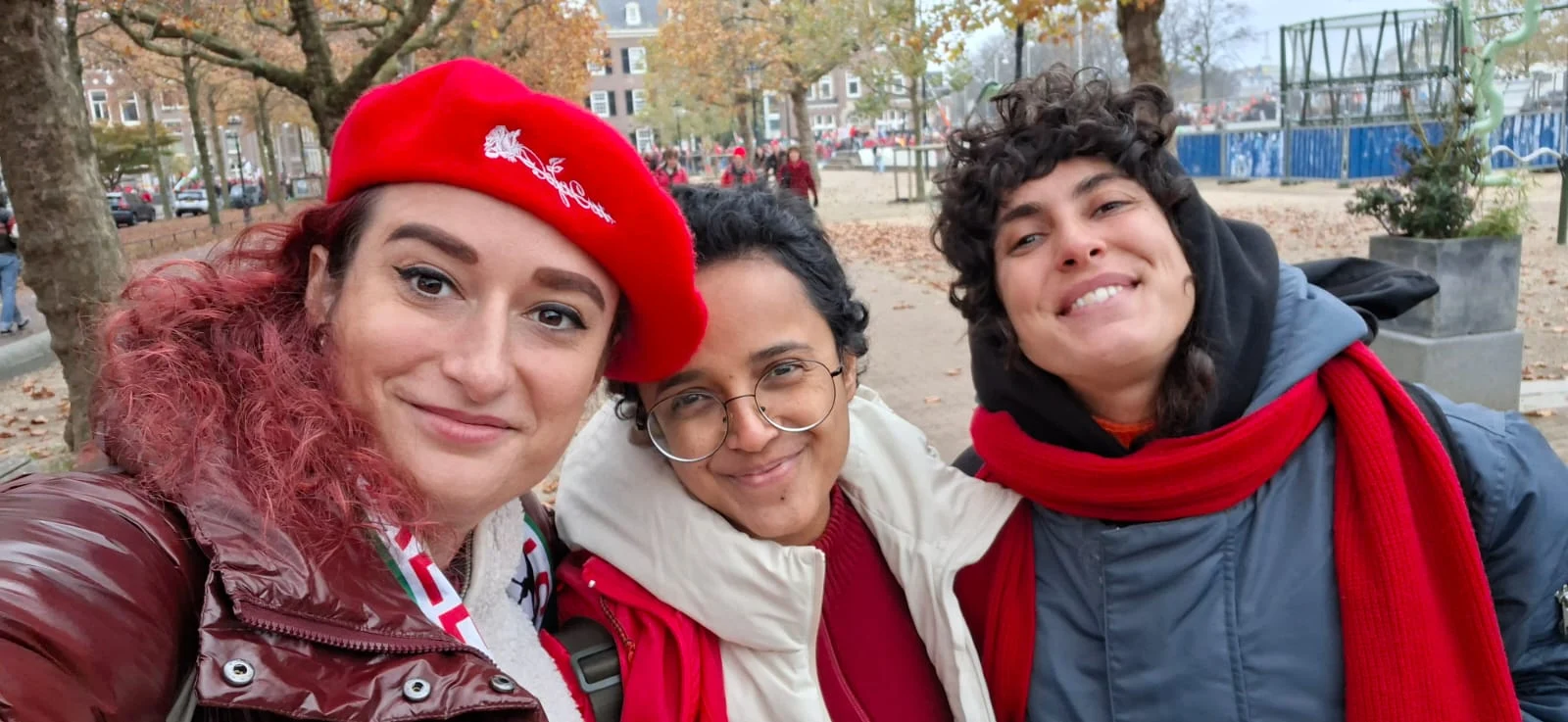
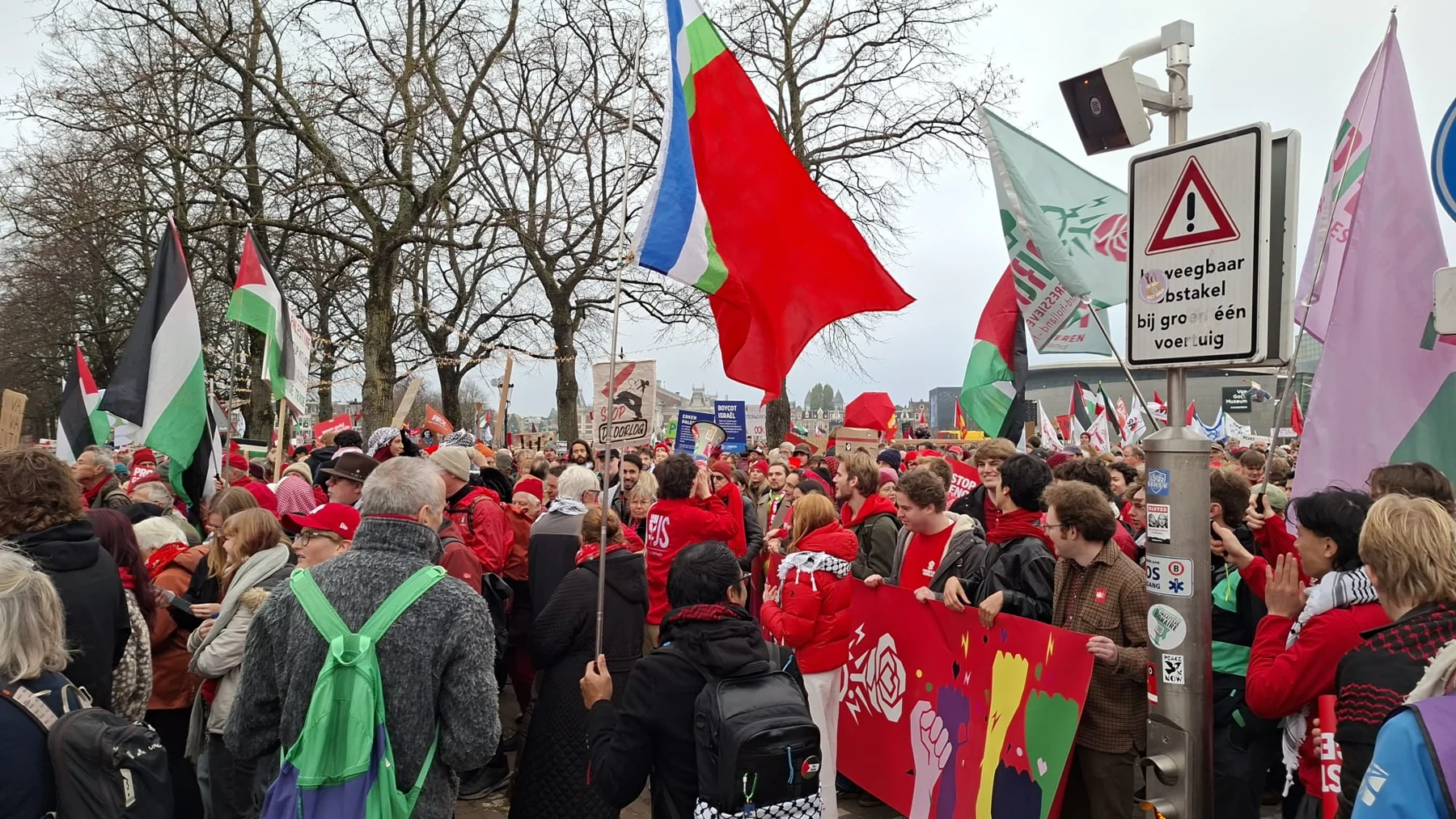
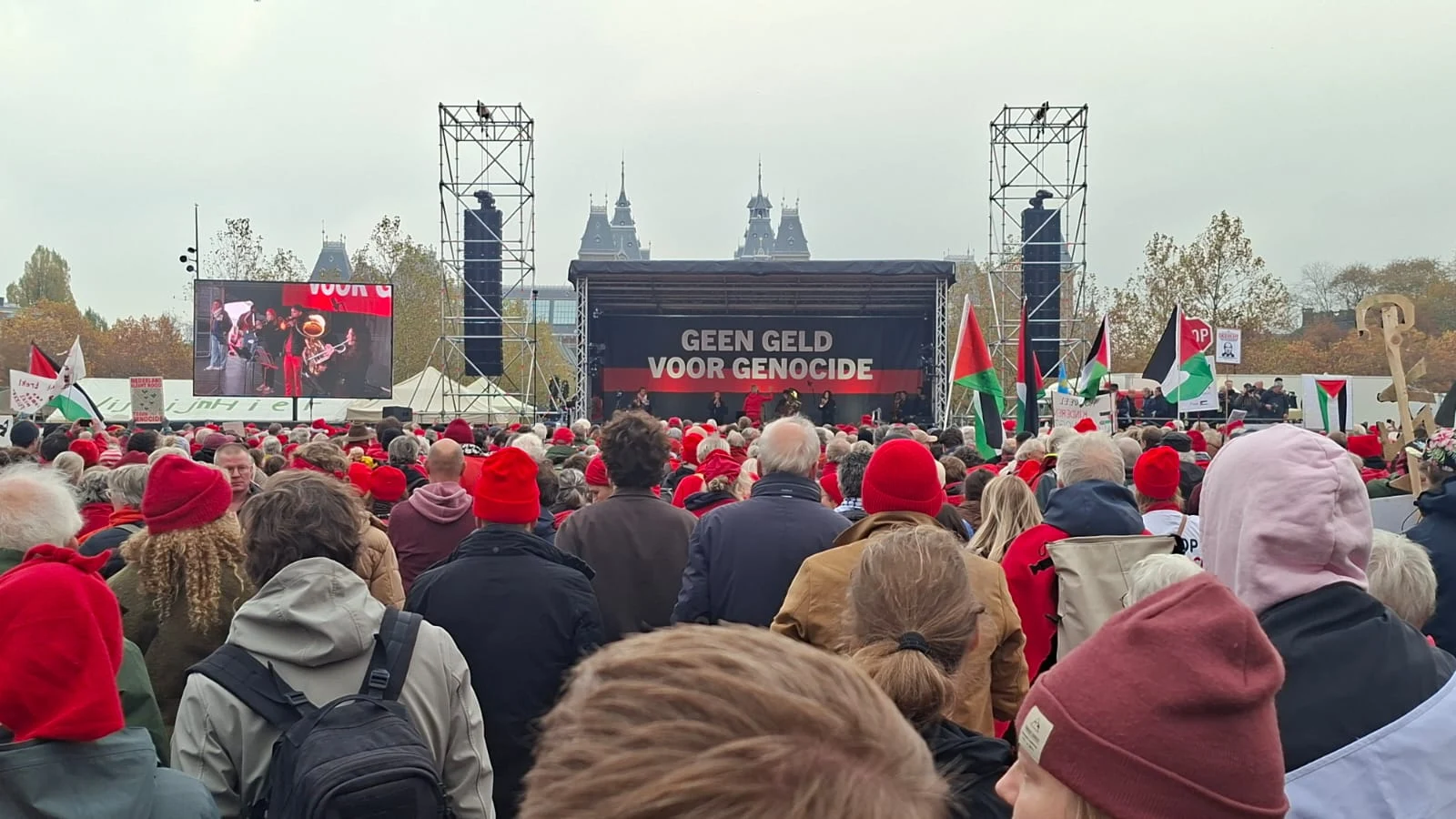
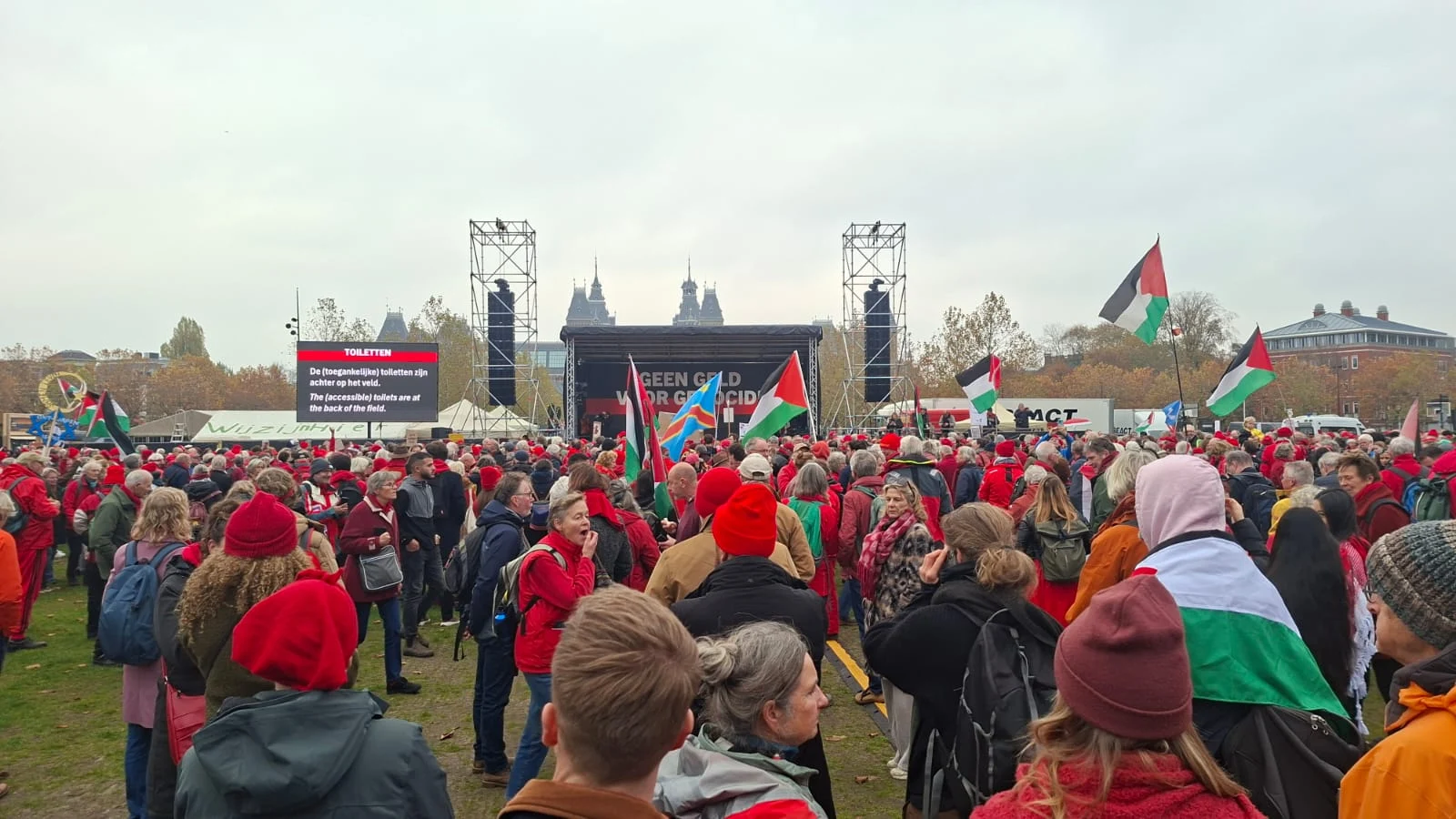
Video moments from the march
Sources and further reading
Monthly newsletter
One email a month. Only what actually matters.
New writing, current thinking and what I am working on, sent once a month. Nothing weekly, nothing automated.